
The future of growth belongs to leaders who design the right conditions for the right conversations to happen.
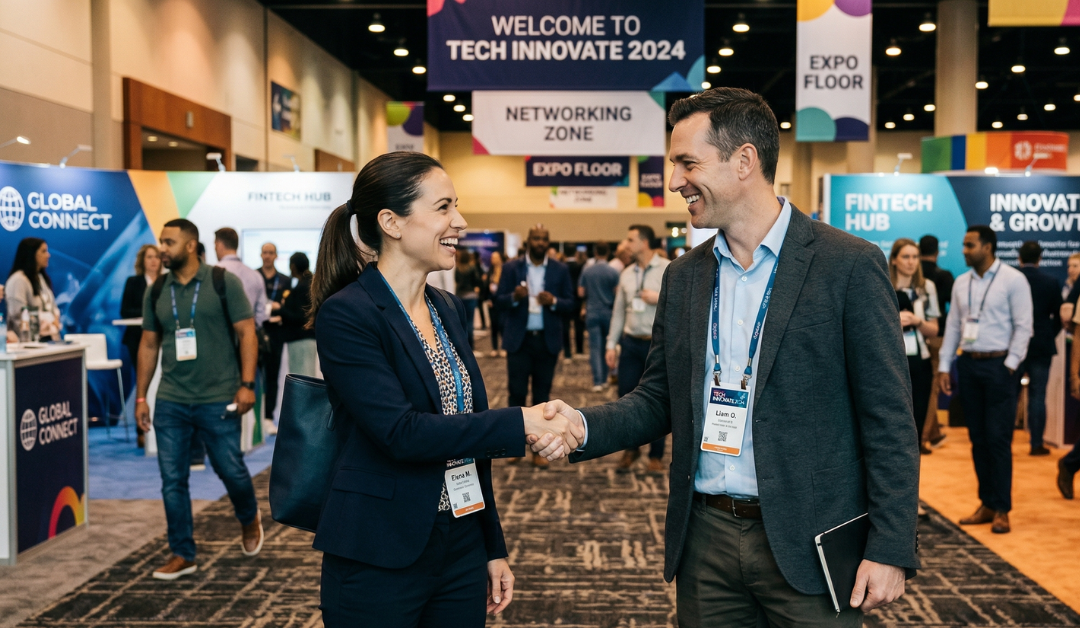
A few years ago, I was standing in the middle of a convention center surrounded by thousands of people who were all supposedly there to network.
Drinks in hand. Name badges on. Smiles ready.
And almost every person in the room was doing the exact same thing:
Pretending to network.
You know the scene.
A quick handshake. A forgettable exchange. The same recycled questions. The same vague promise to “stay in touch.”
A room full of motion.
Very little momentum.
That moment stuck with me because it exposed something most people never stop to question:
We say we want opportunity.
But most of the time, we leave it to chance.
We hope the right person happens to walk into the room.
We hope the right conversation happens to unfold.
We hope the right introduction appears at the right moment.
And then we call it luck.
The Problem With “Networking”
When I started looking back at the biggest breakthroughs in my own career, I noticed a pattern.
The most important opportunities did not come from simply working harder.
They came from meeting the right person at the right time.
A conversation opened a door.
An introduction changed the trajectory.
A room created a breakthrough.
That realization changed how I think about business, growth, leadership, and technology.
Because the truth is simple:
Opportunity is not luck. It is something you can design.
That is the shift more leaders need to make.
For years, networking was treated like a volume game.
Meet more people.
Collect more cards.
Attend more events.
Send more follow-ups.
But more noise does not create more opportunity.
Better alignment does.
That’s the trap.
A packed room is not the same thing as a valuable room.
A long contact list is not the same thing as a trusted network.
And access to people means very little if there is no relevance, no timing, and no real reason to connect.
The future does not belong to the people who can meet the most people.
It belongs to the people who can create the right conditions for the right people to meet.
From Luck to Design
That is what I call building an Opportunity Engine.
An Opportunity Engine starts with awareness.
You begin to notice patterns. You pay attention to people, problems, timing, and trends. You stop moving through rooms blindly.
Then comes access.
You intentionally place yourself in the environments where opportunity already exists. Because proximity creates possibility.
Then comes alignment.
This is where most people fail.
They confuse activity with strategy.
They chase random conversations instead of relevant ones.
They focus on who looks impressive instead of who makes sense.
But the right connection is not just about status.
It is about fit.
Shared goals.
Useful context.
Mutual value.
That is where momentum comes from.
And finally, activation.
Because even the best introduction means nothing if it stays trapped in potential.
Opportunity becomes real when it turns into action:
A pilot project.
A collaboration.
A follow-up meeting.
A new partnership.
A next step.
Why This Matters More Now
This matters even more now because we are entering a world where AI can help us think differently about opportunity.
For a long time, technology was mostly used to give us more information.
Now it can help us create better alignment.
It can help us identify patterns faster.
It can help us surface relevant connections we might have otherwise missed.
It can help us move from random interaction to more intentional opportunity design.
But that only matters if we use technology to serve something human.
Judgment.
Trust.
Curiosity.
Timing.
Context.
The best opportunities still begin with people.
Technology just gives us a better way to find the signal in the noise.
Where MatchPoint Fits In
That is why I believe platforms like MatchPoint matter.
Not because they make networking more efficient.
That is too small of an idea.
They matter because they represent a much bigger shift:
From random networking to designed opportunity.
From collecting contacts to creating context.
From hoping for a lucky break to increasing the odds of the right conversation happening in the first place.
That is a fundamentally different mindset.
It is the difference between attending an event and architecting value inside it.
It is the difference between introducing people because it feels polite and connecting people because it is strategically meaningful.
It is the difference between being busy and being aligned.
The old model was based on volume.
The new model is based on relevance.
That is where growth happens.
That is where innovation happens.
That is where better partnerships happen.
A Leadership Skill That Matters Now
This is not just about events or introductions.
It is about leadership.
Great leaders do not just build products, teams, or strategies.
They build environments.
They create ecosystems where the right ideas can collide.
They help the right people find each other.
They reduce friction.
They increase trust.
They design conditions where momentum is more likely.
In a world overwhelmed by information, that may become one of the most valuable leadership skills of all.
Not knowing everything.
Not meeting everyone.
But building the kind of system where better opportunities can emerge more consistently.
The Bottom Line
That is the future.
Not luck.
Not randomness.
Not more networking theater.
More intentionality.
More alignment.
More activation.
The leaders and organizations who win in the next decade will not be the ones waiting for opportunity to appear.
They will be the ones designing for it.
Because the biggest opportunities in life and business rarely start with a spreadsheet.
They start with a conversation.
The question is whether that conversation happened by accident—
or because someone was smart enough to engineer the conditions for it to happen.