
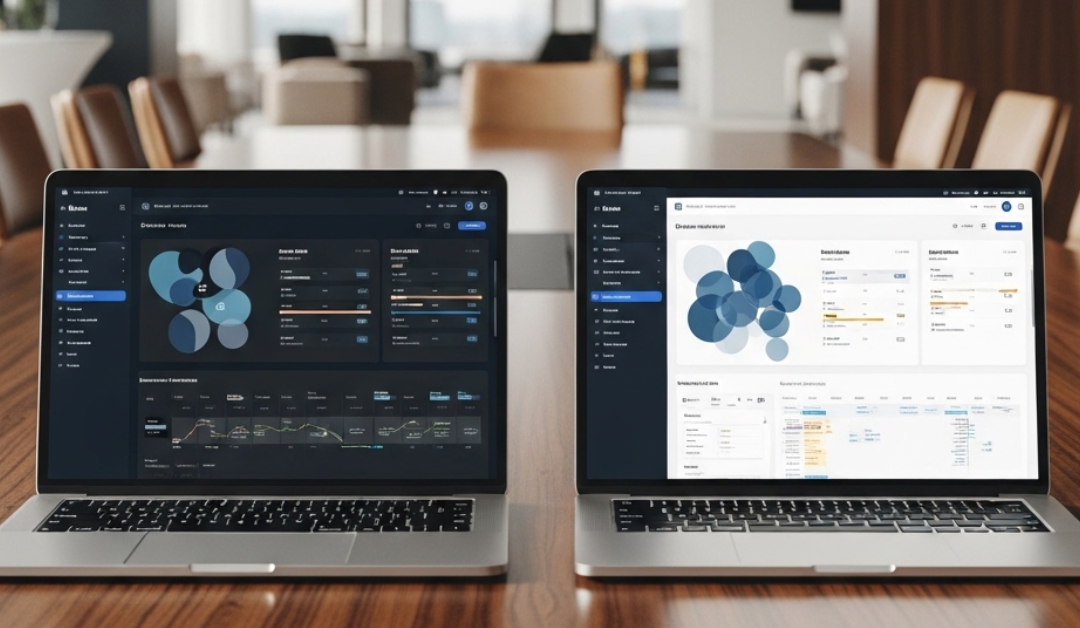
What organizers should actually look for and why the best platforms do more than just generate more meetings.
When event organizers start looking at matchmaking software, it’s easy to get distracted by feature lists.
AI. Smart recommendations. Suggested connections. In-app messaging. Profile matching.
On paper, a lot of platforms sound similar.
In practice, they’re not.
The real question isn’t whether a platform can create more matches. It’s whether it can help create better conversations. The kind that make attendees feel the event was worth their time, make sponsors feel they were part of something valuable, and make organizers feel they delivered on the promise of connection.
That matters even more for conferences and associations. These aren’t purely transactional environments. They’re relationship-driven communities. The goal isn’t just activity. The goal is relevance.
That’s where the best event matchmaking software stands apart.
What Event Matchmaking Software Should Actually Do
At its best, matchmaking software helps attendees find the people, companies, or conversations most relevant to their goals.
That sounds simple. But there’s a significant difference between a tool that suggests connections based on surface-level profile data and a platform that surfaces the right people at the right time based on what attendees actually care about.
For conferences and associations, strong matchmaking software needs to do five things well.
1. Capture Meaningful Intent
If the software only knows a person’s name, title, and company, the matching will be shallow.
That kind of data might tell you what someone does. It doesn’t tell you why they showed up.
Better platforms go deeper. They capture signals like:
- Why the person is attending
- Who they’re hoping to meet and why
- What they want to learn or explore
- Whether they’re in buying, selling, hiring, or partnership mode
- Which topics, industries, or peer groups matter most to them right now
The richer that picture, the more relevant the introductions. Good matchmaking starts with better context and good platforms make it easy for attendees to provide it.
MatchPoint builds attendee profiles around more than 50 attributes, all filled in by the attendee themselves. That’s the foundation everything else is built on.
2. Reduce Friction
The best matchmaking software doesn’t make attendees work hard to understand it.
If users need a tutorial to figure out how to connect with the right people, adoption drops fast. And low adoption is the quiet killer of event networking. The platform might be capable of great things, but if attendees don’t engage with it, none of that matters.
Good matchmaking should feel intuitive from the first moment. Profiles should be easy to complete. Recommendations should make immediate sense. In-app messaging should be simple enough that starting a conversation doesn’t feel like a project.
The goal is to get attendees from “I should network” to “I know exactly who I want to find” as quickly as possible. And then make it easy to act on that.
3. Prioritize Relevance Over Volume
More meetings is not always better.
A calendar full of low-fit meetings creates the illusion of engagement without delivering real value. Attendees leave feeling like the networking was forced or random. And when you ask them afterward whether the event was worth it, networking is often what they point to as the weak spot — not the sessions, not the venue, not the logistics.
The best matchmaking software helps people make fewer, better connections. Not a list of 400 people to browse. A shortlist of people actually worth meeting.
That’s a harder problem to solve than generating volume. It’s also the one that actually moves the needle on attendee satisfaction.
4. Support Sponsor and Exhibitor Value
Networking isn’t only for attendees.
Sponsors, exhibitors, and vendors also want to meet the right people. And most of them are quietly frustrated by the passive exposure model — logos, banner ads, and booth traffic from anyone who happened to walk past.
What sponsors actually want is relevance. They want their solution in front of the people who are evaluating exactly that kind of solution, at the moment they’re open to a conversation.
Strong matchmaking software creates better conditions for that. When the platform understands attendee goals deeply enough to make good introductions, it can also help connect the right attendees to the right vendors, in a way that feels useful rather than promotional.
MatchPoint’s vendor marketplace takes this further. Vendors get listed year-round, not just during the event, and attendees can proactively request more information from specific vendors. That’s a warm lead, an expressed signal of intent, which is a fundamentally different value proposition than passive event visibility.
5. Give Organizers Measurable Insight
Organizers shouldn’t be left guessing whether networking worked.
For too long, event networking has been measured by activity: how many people logged in, how many connections were made, how many messages were sent. Those numbers are easy to report but don’t actually tell you whether the networking created value.
Strong matchmaking software should help answer harder questions:
- Were attendees engaging with recommendations, or ignoring them?
- Were connections happening across relevant audience segments?
- Were sponsors and vendors part of meaningful interactions?
- Which parts of the attendee experience drove the most engagement?
- What can be improved for next year?
That’s where matchmaking stops being a feature and starts being a strategy, something organizers can point to when making the case internally for why the event worked.
Why Many Matchmaking Tools Fall Short
A lot of event technology still treats networking as an add-on.
It’s there, but it’s not central. It gets a tab in the app, a section in the agenda, maybe a dedicated networking hour. But the underlying experience is often a directory with a chat function bolted on, which is really just a digital version of hoping people bump into each other.
That approach tends to fall short in predictable ways. Shallow profile data leads to irrelevant suggestions. Complex interfaces drive down adoption. High match volume without quality filtering creates activity that doesn’t translate to real engagement. And when sponsors ask what they actually got out of the event, the answer is often “exposure,” which is increasingly hard to justify at the budgets they’re committing.
For associations, this gap is even more visible. Member events aren’t just about filling rooms. They’re about strengthening relationships, creating professional value, and reinforcing why membership matters. When the networking feels random or surface-level, it reflects directly on the association, not just the event.
That’s why the platform you choose matters.
What Conferences and Associations Should Look For
If you’re evaluating event matchmaking software, these are the questions worth spending time on (and they’ll tell you more than any feature comparison grid).
Does the platform capture real attendee intent, or just basic profile data? Job title and company name aren’t enough. Look for platforms that understand why someone is attending and what they’re actually hoping to get out of it.
Will the recommendations feel relevant to users? Ask for a demo with real or representative data. Generic demos with placeholder profiles don’t tell you much. You want to see how the matching behaves when it has actual context to work with.
Is the experience simple enough for strong adoption? The most sophisticated matching engine in the world doesn’t help if attendees don’t use it. Ease of use isn’t a nice-to-have, it’s the thing that determines whether the platform delivers value at all.
Can it support sponsors and exhibitors in a meaningful way? If your sponsor value story starts and ends with logo placement, that’s a vulnerability. Look for platforms that can make sponsor engagement feel earned and relevant rather than paid and passive.
Will it work within your existing event tech stack? Most organizers aren’t starting from scratch. You have a registration system, probably a CRM, maybe an existing event app. Your matchmaking platform should integrate cleanly, whether that’s through a direct integration, Zapier, or a straightforward CSV import.
Does it help you measure networking quality, not just activity? Post-event reporting matters. If you can’t explain what the networking actually produced, it’s harder to improve it and harder to justify the investment to stakeholders.
Why MatchPoint Stands Out
MatchPoint is built around a simple premise: the goal of event networking isn’t more connections. It’s better ones.
That shapes every decision in how the platform works.
Attendees build rich profiles based on more than 50 attributes: their goals, interests, challenges, what they’re looking to learn, what they have to offer. MatchPoint’s matching algorithm uses all of that to surface introductions that are actually relevant, before and during the event. Not a scrollable directory. A curated shortlist of people worth finding.
There’s no attendee directory in MatchPoint — intentionally. The directory model puts all the work on the attendee and produces exactly the kind of random, low-signal browsing that makes event networking feel like a chore. MatchPoint replaces that with purposeful introductions delivered directly to each attendee based on their specific profile.
For sponsors and vendors, MatchPoint offers something beyond passive visibility. The vendor marketplace runs year-round, and attendees can proactively reach out to vendors they want to hear from. That creates warm, qualified leads, not booth scans from people who were just walking by.
And because MatchPoint integrates with Cvent, Bizzabo, and any other registration system via Zapier, or through a simple CSV import, getting set up doesn’t require tearing apart your existing event tech stack.
For associations specifically, the fit is strong. Member events carry a higher expectation than most. Members aren’t just buying a ticket, they’re investing in a professional community, and they expect that community to understand them and help them find people worth knowing. MatchPoint is built to deliver that experience at scale.
The Bottom Line
The best event matchmaking software isn’t the one with the longest feature list.
It’s the one that helps create the most relevant conversations with the least friction and gives organizers the confidence that networking isn’t just happening at their event, but actually working.
For conferences and associations, that’s the difference between a platform that adds noise and one that adds value.
MatchPoint is built for the second outcome.
Want to see what better event matchmaking looks like?
See how MatchPoint helps conferences and associations create more relevant, measurable connections, and make every event feel worth the trip.